Guide
Furnace running but no heat
The fan is moving air, but it is cool or barely warm. That narrows the problem: the blower works, so the trouble is in lighting the burners or keeping them lit.
Work through it in this order
Fan setting
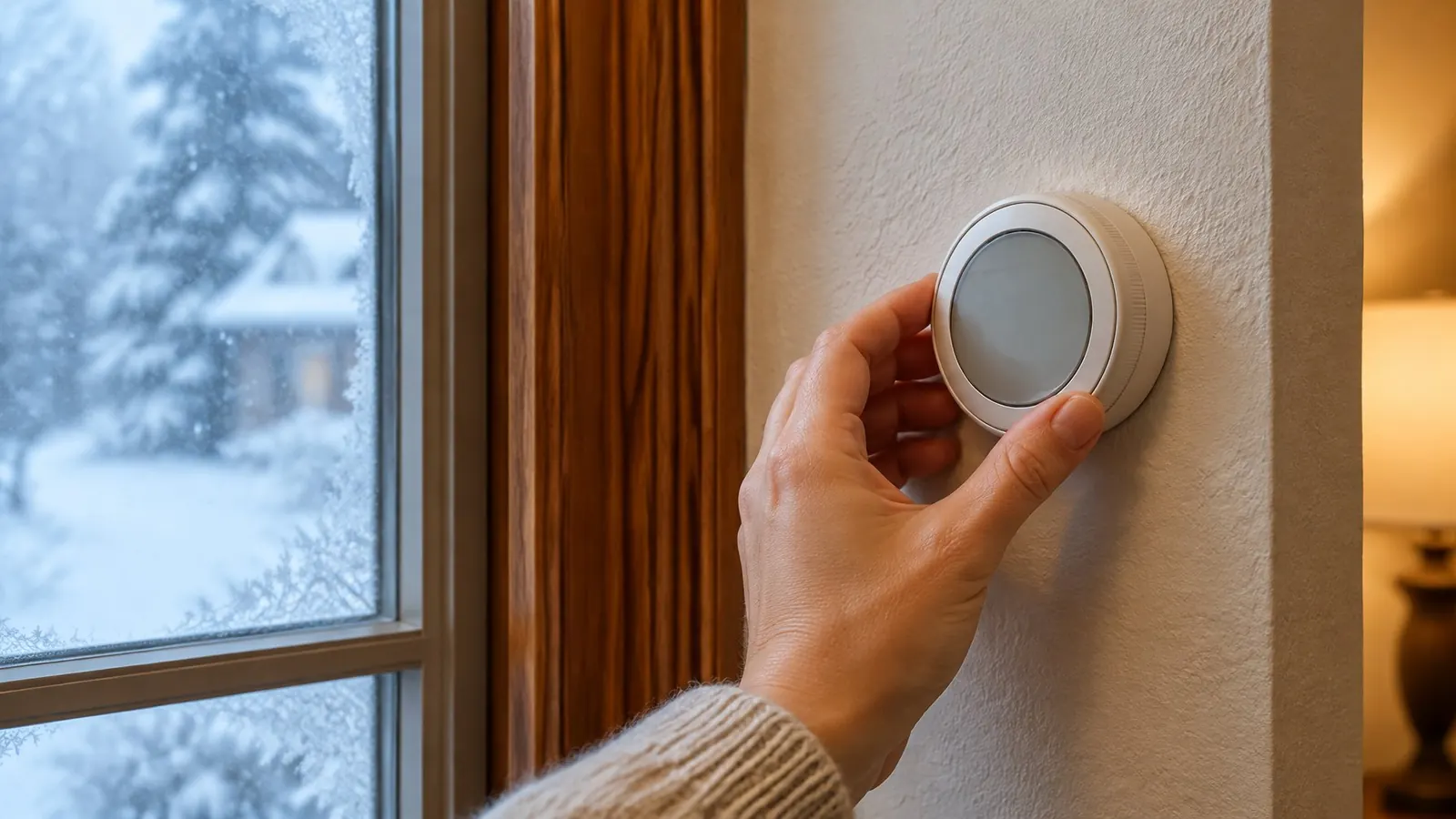
If the thermostat fan is set to On instead of Auto, the blower runs between heat cycles and pushes room-temperature air. Switch it to Auto and wait a cycle.
Look through the window
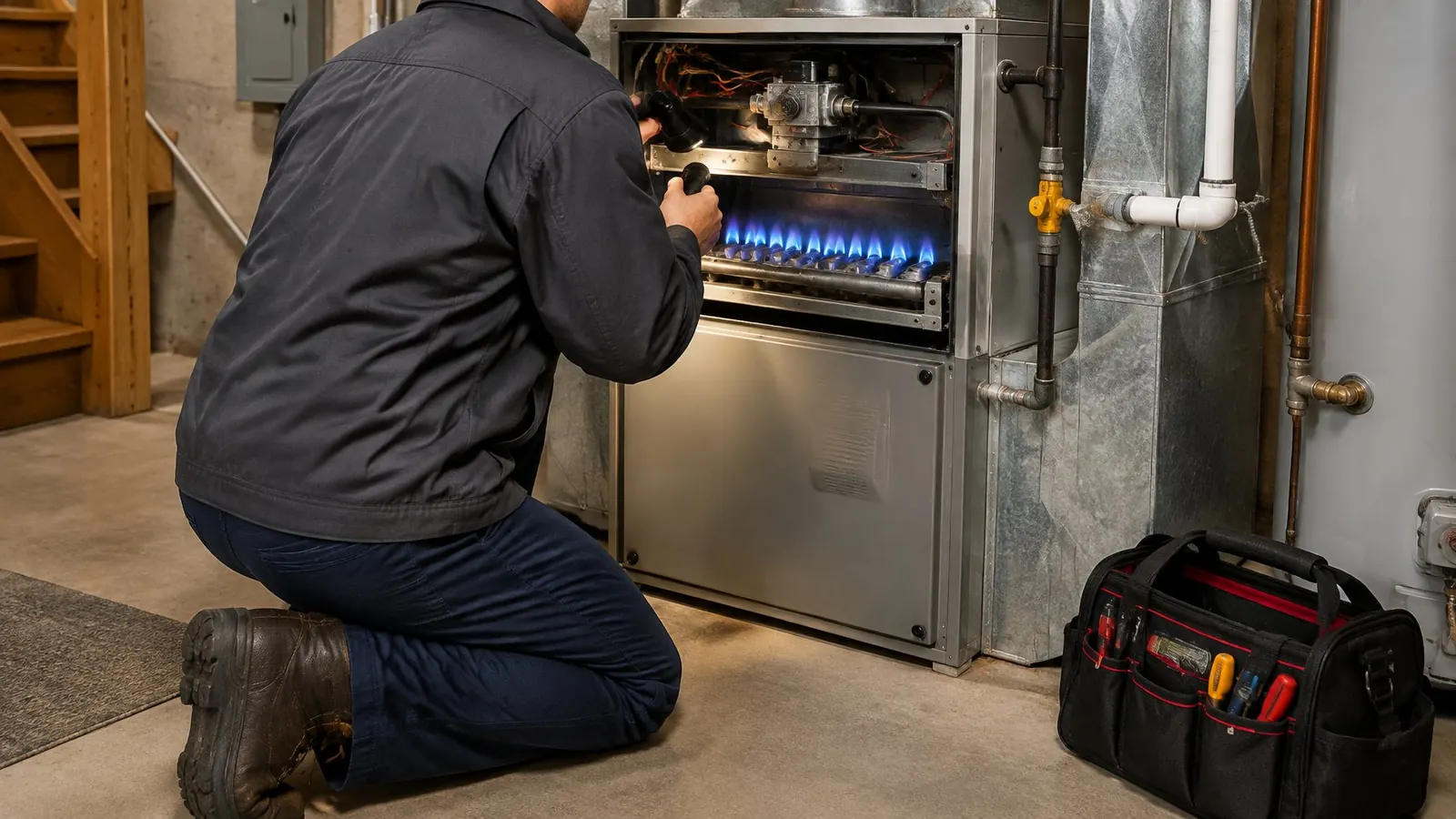
Most furnaces have a small sight glass and a status light. A steady blink pattern is a fault code; the legend is printed on the inside of the panel door.
Listen at start-up
A hum from the inducer, then a click and a glow, then a whoosh of gas: if the sequence stops before the whoosh, the burners are not lighting.
Check the outside pipes
On a side-vented furnace, snow or an ice ring across either pipe makes the pressure switch refuse to let the burners light.
Check the filter and registers
Restricted airflow overheats the heat exchanger. The furnace shuts the burners off to protect itself and keeps the fan running to cool down.
What it usually turns out to be
When the easy checks come up clean, these are the common findings:
- A flame sensor coated over the season, which lets the burners light for a few seconds before the board shuts the gas off.
- A cracked or worn hot-surface igniter that no longer glows hot enough.
- A full condensate trap on a high-efficiency furnace, which backs water into the pressure switch hose.
- A gas supply problem. If the stove and water heater also have no gas, it is a utility question rather than a furnace one.
- A limit switch that has tripped so many times it now stays open.
If the second floor is the only cold part
When the furnace heats but the upstairs never catches up, the burners are not the issue. Look for closed dampers on the supply ducts in the basement, a disconnected duct joint, or returns that are blocked by furniture. Older houses with long runs to the top floor feel this most on windy nights, when the house loses heat fastest.
If the problem is new, it is worth a contractor's look. If it has always been that way, it may be a duct design question to raise during a furnace replacement.
What not to try
Do not bypass a safety switch, jump wires on the control board, or hold the gas valve open. Those switches are what stops a furnace from overheating or venting exhaust into the house. If you smell gas, leave the house first and call from outside, as National Fuel advises.
Cold house, or a furnace you no longer trust?
Tell the contractor what you hear, see or smell at the furnace. Whoever picks up is with an independent heating and cooling contractor working around Buffalo, New York, and can lay out the next step.