Furnace repair
Furnace repair in Buffalo, New York
Most furnace failures come down to a handful of parts: the igniter, the flame sensor, the pressure switch, the limit switch, the blower and the control board. A contractor works through them in order.
The faults that show up most
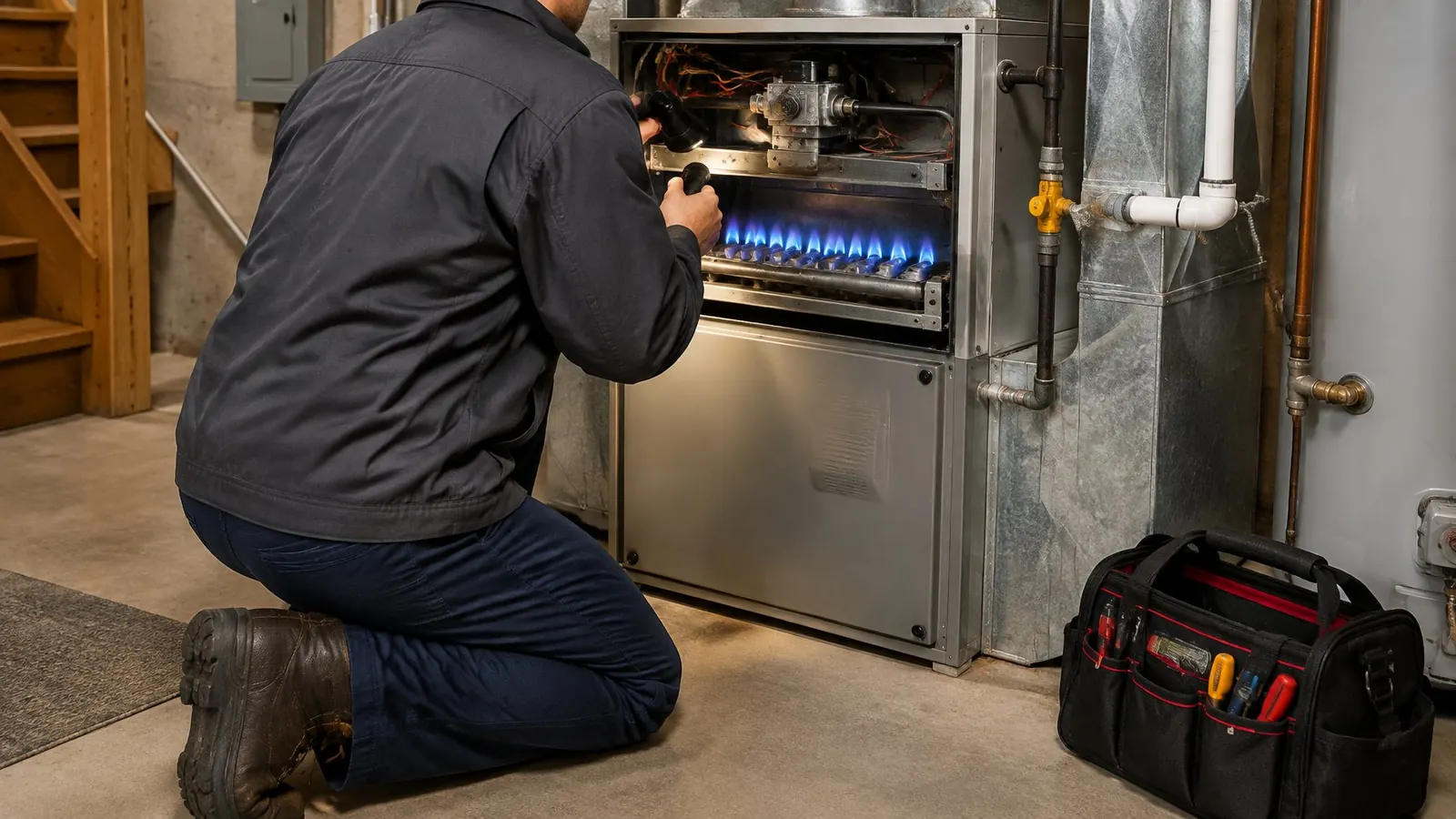
A modern gas furnace runs a fixed start-up routine. The inducer fan clears the flue, a pressure switch confirms the draft, the igniter glows, the gas valve opens, and a flame sensor proves the burners lit. If any step fails, the control board stops and tries again, then locks out.
That routine explains the symptoms people describe on the phone:
- Burners light, then die within seconds. Often a dirty flame sensor that cannot prove the flame.
- Inducer hums, nothing lights. The pressure switch is not closing, which points at a blocked vent, a cracked hose or a full condensate trap.
- Short bursts of heat, then off. The high-limit switch is tripping because air is not moving: a choked filter, closed registers or a weak blower.
- Blower runs nonstop. A thermostat fan setting, a stuck relay or a limit fault holding the fan on.
- Dead silence. Power switch, breaker, door safety switch, a blown control fuse or the thermostat itself.
Five minutes of checks before you call
None of these need tools, and each one rules out a cause the contractor would otherwise ask about.
- Thermostat on Heat, set a few degrees above room temperature, fresh batteries if it uses them.
- The furnace service switch, usually on a box near the stairs or on the joist, is on.
- The breaker for the furnace has not tripped.
- The filter is not grey and bowed. Swap it if you have a spare of the same size.
- If the furnace vents out the side wall through two plastic pipes, both openings are clear of snow and frost.
Write down any flashing light code on the control board, visible through the small window in the lower panel. It tells the contractor which step failed.
Stop and leave the house if you smell gas
National Fuel, the gas utility for Buffalo, tells customers to leave first and call from a safe place. Its guidance is short:
- Go outside, however faint the smell.
- Do not flip switches, unplug things or use a phone while inside.
- Call 911 or National Fuel once you are a safe distance away.
- If a carbon monoxide alarm is sounding, get everyone out and read the CO guide afterward.
Repairs need a permit in the city too
The City of Buffalo does not limit its permit rule to new installations. Chapter 238 has the licensed contractor apply for a permit before installing, repairing, reconstructing or materially altering heating equipment. Small part swaps are often handled under that rule, so ask the contractor how they file.
The same chapter requires the contractor to test the equipment before handing it back: controls, gas and flue gas leakage, stack temperature and draft. Ask for those readings. A contractor who took them will have them written down.
Fix it or replace it?
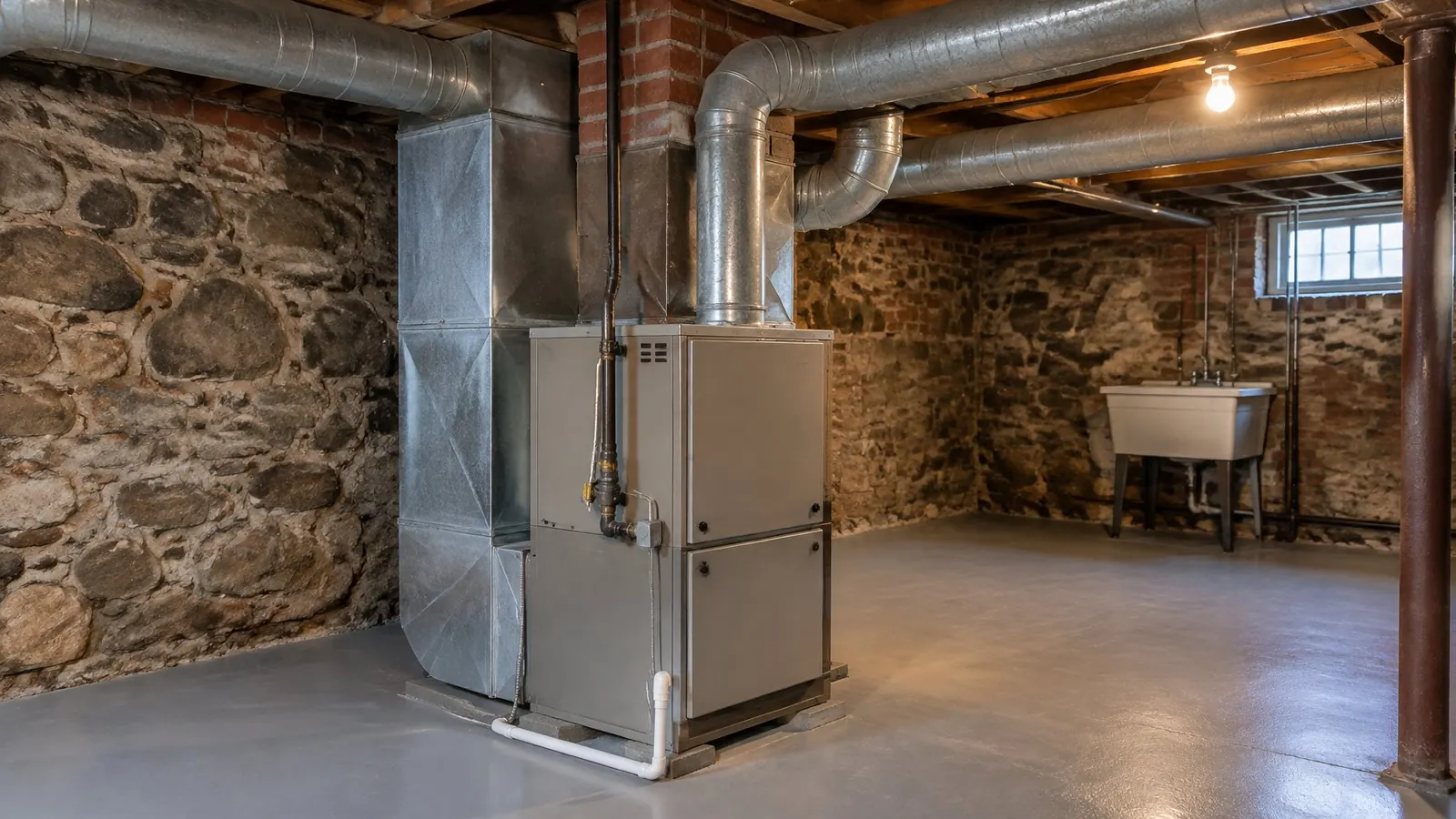
A failed igniter or sensor on a sound furnace is a repair. A cracked heat exchanger, a rusted-through secondary coil, or a third major part in two winters usually is not. The age of the furnace, the cost of the part against the value of the whole unit, and whether parts are still made all feed that call.
The replacement page covers what a new furnace involves in an older Buffalo house.
Questions
Can I reset the furnace myself?
Turning the power switch off for half a minute and back on clears most lockouts. If the furnace locks out again on the next cycle, the fault is still there and repeated resets will not fix it.
Why does the furnace work for an hour, then stop?
Intermittent faults usually come from a sensor that barely proves flame, a pressure switch near its limit, or a condensate drain that fills slowly. They are worth a visit before a cold night turns them into a full outage.
Is a plastic vent pipe covered in frost a problem?
A little frost at the exhaust is normal on a cold day. A ring of ice that narrows the opening, or snow over either pipe, can shut a high-efficiency furnace down.
Cold house, or a furnace you no longer trust?
Tell the contractor what you hear, see or smell at the furnace. Whoever picks up is with an independent heating and cooling contractor working around Buffalo, New York, and can lay out the next step.