Central air
Central air installation and replacement in Buffalo, New York
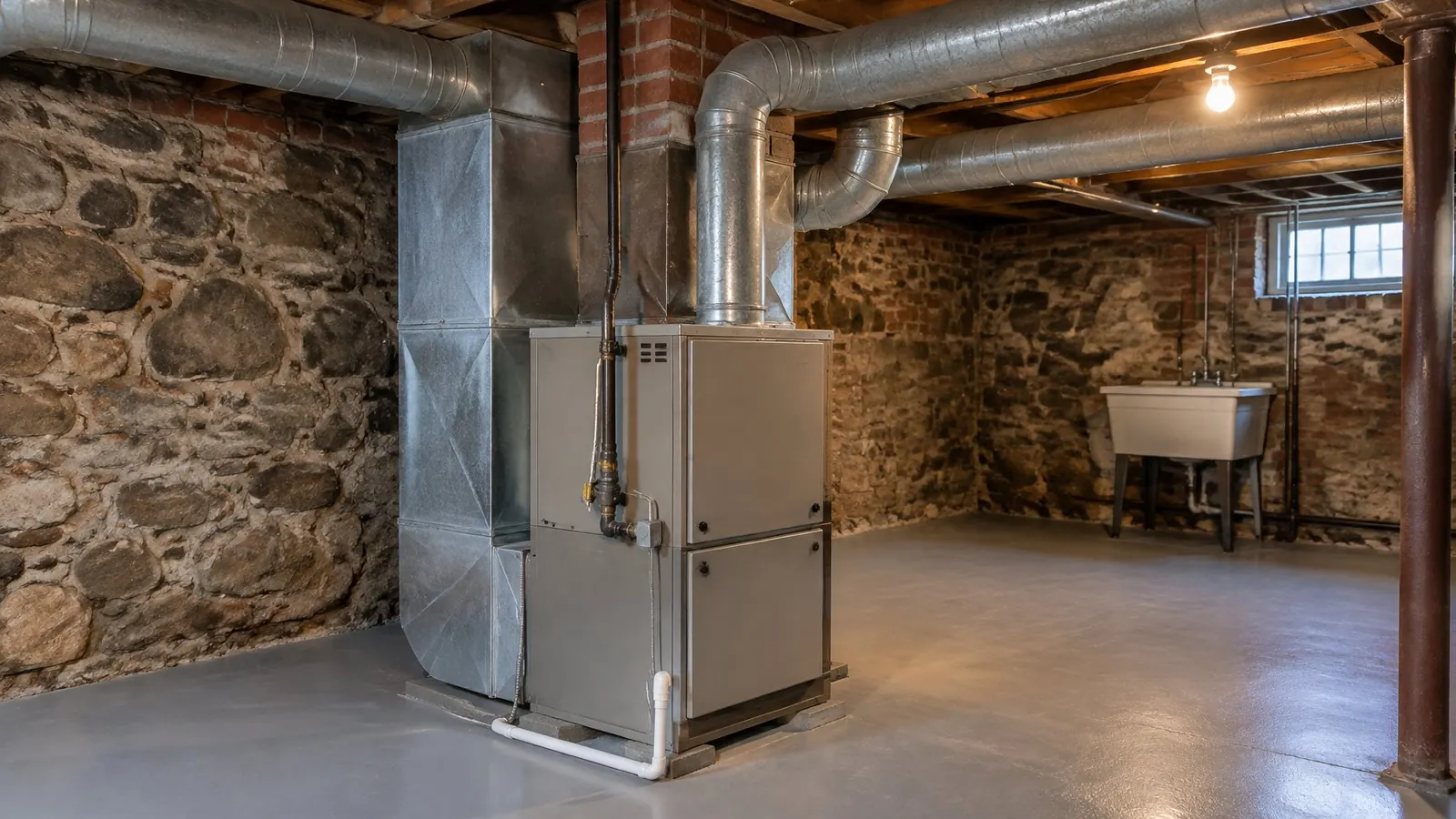
In a house with a forced-air furnace, central air is an add-on to the system you already have: a coil on the furnace, a condenser outside, and copper lines between them.
Start with the ducts
Central air uses the furnace's ducts and blower. If the house has forced-air heat, the ducts are there. Whether they are good enough for cooling is another question. Cold air is heavier than warm air, and duct systems laid out to heat from basement registers can struggle to cool the second floor.
Ask the contractor to look at upstairs supply and return paths before quoting. A return added on the second floor can matter more than a larger condenser.
Sizing for a mild-summer climate
An oversized air conditioner cools the air quickly and shuts off before it has pulled much moisture out, which leaves the house cool and clammy. In a place where summer is short and humid days come in stretches, a right-sized system that runs longer usually feels better. The same heat-gain calculation that sizes a furnace properly applies here, worked for summer conditions.
Where the condenser goes
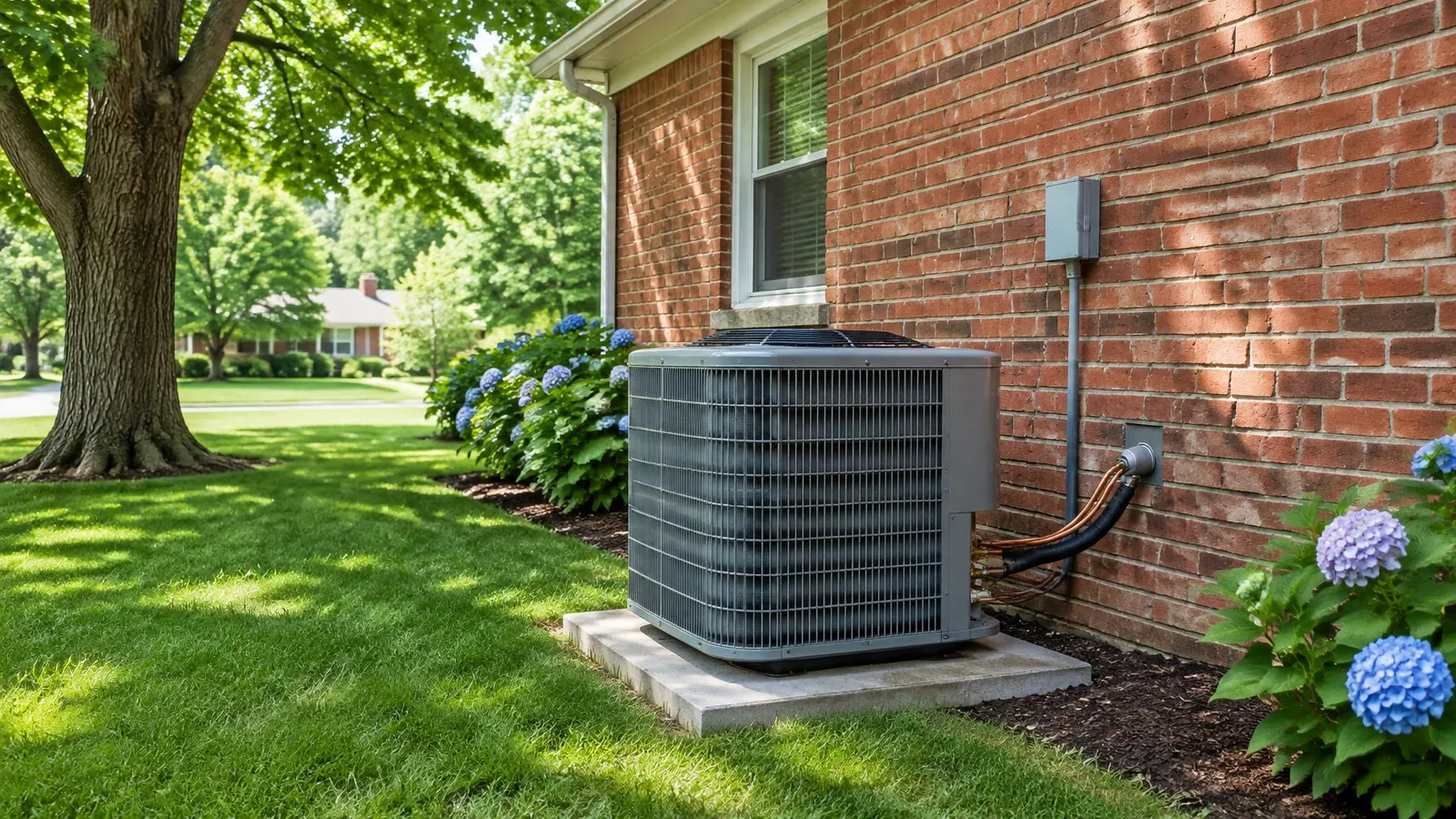
Placement is partly a neighbor question. The Town of Amherst, for example, asks for a survey showing the location of exterior equipment and does not allow outdoor heating or air-conditioning equipment within three feet of any lot line (Amherst mechanical permit). Other towns have their own setbacks. City lots with narrow side yards make this worth settling before anything is ordered.
Beyond the rules, the unit needs open air around it, a level pad, and a spot where snow sliding off the roof will not land on it.
Wiring and permits
A new condenser needs its own circuit and an outdoor disconnect. Several towns license electricians separately: Kenmore requires a permit to install, alter or repair wiring (Village of Kenmore), and Lackawanna requires electricians to be licensed with the city to pull an electrical permit (Lackawanna Code Enforcement). Ask who handles the electrical side and under whose permit.
Replacing an existing system
When the outdoor unit fails on an older system, the indoor coil is usually replaced with it so the two are matched and use the same refrigerant. If the furnace is near the end of its life too, pricing both together is worth the extra phone call.
A ducted heat pump is another option: it sits where the condenser would and also heats in milder weather, with the furnace taking over in the cold. Ask whether that pairing fits the house. The furnace replacement page covers the indoor side.
Questions for the quote
How was the size worked out?
Ask for the heat-gain figure, not a rule of thumb per square foot.
Will the upstairs cool?
Ask what changes, if any, the contractor recommends for second-floor supply and return.
Where will the condenser sit?
Confirm the spot meets the town's setback and stays clear of roof snow.
Who does the electrical work?
Get the name of the licensed electrician or the license the contractor holds.
What does the warranty cover?
Ask about parts and labor separately, and whether registration is required.
Cold house, or a furnace you no longer trust?
Tell the contractor what you hear, see or smell at the furnace. Whoever picks up is with an independent heating and cooling contractor working around Buffalo, New York, and can lay out the next step.